Warren noted that he rarely used the Widgets panel or Microsoft Teams, citing that he preferred the weather display that later versions of Windows 10 offered, and didn't use Teams to communicate with his friends and family. He also acknowledged the expansion of Microsoft Store to include more "traditional" desktop applications. Overall, he concluded that "I wouldn't rush out to upgrade to Windows 11, but I also wouldn't avoid it. After all, Windows 11 still feels familiar and underneath all the UI changes, it's the same Windows we've had for decades." If your existing Windows 10 PC is running Windows 10 20H1 or later and meets the minimum hardware specificationsit will be able to upgrade to Windows 11.

The upgrade rollout plan is still being finalized, but for most devices already in use today, we expect it to be ready sometime in early 2022. Not all Windows 10 PCs that are eligible to upgrade will be offered to upgrade at the same time. To see if your PC is eligible to upgrade, refer to our knowledge base for a list of tested systems. Once the upgrade rollout has started, you can check if it is ready for your device by going to Settings/Windows Updates. Similar to how end users are notified when updates are available in Windows 10, end users will see an indication in the notification areas of the taskbar in the bottom right, that the upgrade is available. More information on how that is presented will be available at a later date.

Additional desktop notification options may be also be added at a later date. If your existing Windows 10 PC is running Windows 10 20H1 or later and meets the minimum hardware specifications it will be able to upgrade to Windows 11. To see if your PC is eligible to upgrade, refer to the specifications here. Microsoft is all set to roll out Windows 11 for all compatible devices starting October 5.
The beta version of the operating system has already been out now for months and the final build is also available to Windows Insider users. The update is said to have intuitive navigation along with a refreshed look and more apps. One of the most noticeable changes in Windows 11 in the taskbar, which looks similar to the one on Mac, and context menus, popups and windows have rounded corners. According to the company, Windows 11 is built on the same foundation as the Windows 10 and it is designed to work efficiently on both touchscreen and non-touchscreen devices. To help get the latest version of Windows without any hiccups you can read below.

Windows 11 is compatible with almost every device that supports Windows 10 but to be sure if your device is compatible for the update you install the Microsoft PC Health Check app on your device. The app runs through the system configurations and will give you the required information. Microsoft also suggests that for best Windows 11 upgrade experience, eligible devices should be running Windows 10, version 20H1 or later. In October 2019, Microsoft announced "Windows 10X", a future edition of Windows 10 designed exclusively for dual-touchscreen devices such as the then-upcoming Surface Neo. It featured a modified user interface designed around context-sensitive "postures" for different screen configurations and usage scenarios, and changes such as a centered taskbar and updated Start menu without Windows 10's "live tiles". Legacy Windows applications would also be required to run in "containers" to ensure performance and power optimization.

Microsoft stated that it planned to release Windows 10X devices by the end of 2020. Internet Explorer has been replaced by the Chromium-based Microsoft Edge as the default web browser like its predecessor, Windows 10, and Microsoft Teams is integrated into the Windows shell. Microsoft also announced plans to allow more flexibility in software that can be distributed via Microsoft Store, and to support Android apps on Windows 11 . Windows 11, the latest operating system from Microsoft, isfinally here . The software giantunveiled the new OS at a virtual event on Thursday . Cunningham concluded that "as I've dug into and learned its ins and outs for this review, I've warmed to it more", but argued that the OS was facing similar "public perception" issues to Windows Vista and Windows 8.

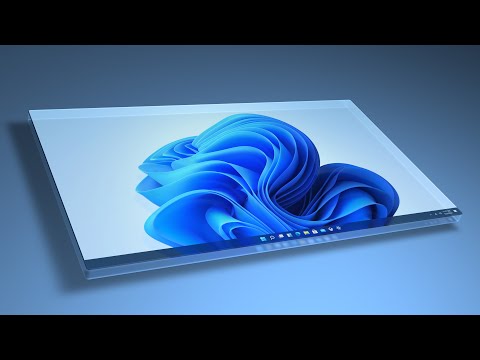
A redesigned user interface is present frequently throughout the operating system, building upon Fluent Design System; translucency, shadows, a new color palette, and rounded geometry are prevalent throughout the UI. A prevalent aspect of the design is an appearance known as "Mica", described as an "opaque, dynamic material that incorporates theme and desktop wallpaper to paint the background of long-lived windows such as apps and settings". If your existing Windows 10 PC is running the most current version of Windows 10 and meets the minimum hardware specifications it will be able to upgrade to Windows 11. Not all Windows 10 PCs that are eligible to upgrade to Windows 11 will be offered to upgrade at the same time.
To see if your PC is eligible to upgrade, download the PC Health Check app. Minor complaints aside, we like to see Microsoft giving its marquee software some attention. For the last few years, the company has focused more on its Azure cloud computing services—justifiably given that business's profitability. Windows 11 brings slick new looks, useful new tools, updated default apps, extra capabilities, and performance advances. Perhaps that's enough to lure away some Chrome OS users or Mac users. As with Windows 10, you can let the company know what you'd like to see added to the software in a dedicated Feedback Hub app, and you may be surprised at how often it listens.
Anyone can sign up for preview builds of the OS through the Windows Insider Program. This lets you experience new features before they're available for general release. The next major update, 22H2 is expected to add Start menu options, some redesigned stock apps, and machine-learning intelligence. For enhanced productivity, Windows 11 includes features such as Snap Layouts, Snap Groups and Desktops. The Snap Layouts present different layout options when working with multiple apps simultaneously, and swiftly arrange the apps side-by-side on the screen to aid multitasking.
Snap Groups are a collection of apps that a user is working with, which can be accessed together quickly, even after a break, straight from the taskbar. Additionally, the Desktops can now be customised with individual wallpapers, and users can create multiple Desktops for work, entertainment, or gaming with different sets of apps to stay organised. The OS also offers new easier docking and undocking experience for multiscreen users.

It is located in the centre of the taskbar and can be accessed by clicking on the new Start button. The Start menu straightaway presents the simpler design of the new OS with most of the top half dedicated to pinned apps and the bottom half showing recommended files and apps. There is a search bar at the top of the menu that can be used for searching the device, as well as the web. With the live tiles and other elements removed, the Start menu essentially looks cleaner and offers things that a user would need to get started.
Besides, Start is powered by cloud and Microsoft 365, which makes it possible to display recent files on the menu, even if they were accessed on a different device or platform. Perhaps the most important thing to know about the release of Windows 11 is that we should expect it to change significantly over the next few years. I've been using beta versions of Windows 11 for a month in the lead-up to writing this review, and it seems like every few days there's a minor new feature or redesigned app to check out. We may not see that feature fully realized in Windows until next year.

The Windows 11 update is right around the corner and it's shocking to know that not many people know about. The most widely used desktop operating system in the world is set to get a host of enhancements and new features, which are expected to take the user experience to another level altogether. Amazing new features include the ability to even run Android apps on a Windows desktop for the first time. Now, a recent survey has claimed that only 38 percent of users are aware of the next Windows 11 release, which is scheduled to arrive on Monday. Windows 11, first introduced back in June, delivers a sleeker look compared to its previous versions. New features include support for Android apps, more detailed widgets, an update to layouts for snapping applications to the screen and a completely revamped Microsoft Store.
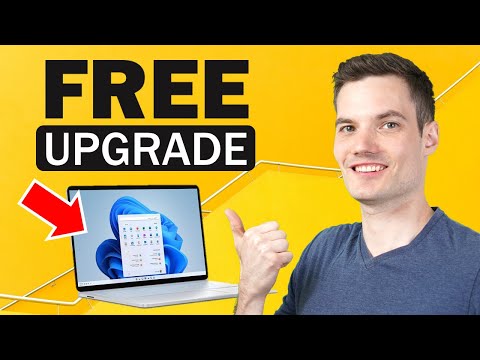
Windows 11 also includes a new user interface, a redesigned Start menu, Microsoft Teams integration, and much more. Microsoft has officially released Windows 11 in its stable form, and the new update is free for existing Windows 10 users on compatible PCs worldwide. Microsoft expects all eligible devices will have access to the free Windows 11 upgrade by mid-2022. The update was released a day earlier to its planned launch date of 5 October. File Explorer is a good example of Windows 11's new look, particularly its updated left panel controls and folder icons. Note the simplified ribbon along the top, which is far less busy and distracting than the previous File Explorer's.

The New button at the top left works for new folders or documents supported by your apps, and the same viewing options for files are available. The overflow menu offers file compression, selection, and Properties options, as well as the old Folder Options dialog. The right-click context menus, which have grown longer and longer over the years, get shorter, smarter, and clearer in Windows 11. Anyone with one of the newer chips should have no trouble installing Windows 11 via Windows Update. Microsoft made a downloadable ISO disk image file for the beta Insider version available for installing Windows 11, allowing in-place upgrades or clean installations on a PC or in a virtual machine.

A similar installation option is now available for the release version of Windows 11 via Microsoft's Download Windows 11 page. Some sources have reported that installing the OS with the ISO installer bypasses the system's hardware requirements, but that's not advisable as you may not get future OS updates if you install it on unsupported hardware. Windows 11 SE was announced on November 9, 2021, as an edition exclusively for low-end devices sold in the education market, and a successor to Windows 10 S. It is bundled with applications such as Microsoft Office for Microsoft 365, Minecraft Education Edition, and Flipgrid, while OneDrive is used to save files by default. Windows 11 SE does not include Microsoft Store; third-party software is provisioned or installed by administrators.
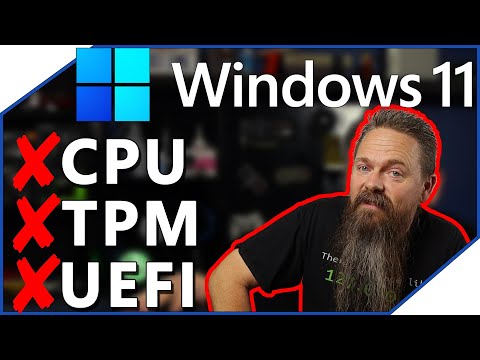
As part of the minimum system requirements, Windows 11 only runs on devices with a Trusted Platform Module 2.0 security coprocessor. According to Microsoft, the TPM 2.0 coprocessor is a "critical building block" for protection against firmware and hardware attacks. In addition, Microsoft now requires devices with Windows 11 to include virtualization-based security , hypervisor-protected code integrity , and Secure Boot built-in and enabled by default.

The operating system also features hardware-enforced stack protection for supported Intel and AMD processors for protection against zero-day exploits. The "Widgets" button on the taskbar displays a panel with Microsoft Start, a news aggregator with personalized stories and content (expanding upon the "news and interests" panel introduced in later builds of Windows 10). Microsoft Teams is similarly integrated with the taskbar, with a pop-up showing a list of recent conversations. For example, Windows 11 has new Contrast themes, redesigned closed caption themes, and AI-powered Windows Voice Typing. The new OS also adds APIs for programming assistive apps, and even the Windows Subsystem for Linux now has accessibility options. Windows Widgets are back in Windows 11, accessible via the dock, with Microsoft touting AI-powered dynamic features that enable widgets, as with the Start menu, to change depending on the apps you're using and the time of day.
On the touchscreen, you can slide from the left on the desktop to have widgets appear. Original equipment manufacturers can still ship computers without a TPM 2.0 coprocessor upon Microsoft's approval. Devices with unsupported processors are not blocked from installing or running Windows 11; however, a clean install or upgrade using ISO installation media must be performed as Windows Update will not offer an upgrade from Windows 10.

Some third-party software may refuse to run on "unsupported" configurations of Windows 11. If your PC is running Windows 10, then you can check to see if your device is eligible to upgrade using the PC Health Check app. This will basically check whether your PC meets the minimum system requirements required for Windows 11. You can then check to see if the Windows 11 upgrade is ready for your specific device by opening Windows Update settings.
Has Windows 11 Released In India Unveiled in June, Windows 11 is designed as Microsoft's most advanced operating system for PCs. The new version brings a fresh user interface that includes a centrally aligned Start menu and upgraded fonts as well as notification sounds. It also integrates Microsoft Teams to let users connect with others over chat, voice, or video calls. Windows 11 also improves multitasking with Snap Layouts and Groups. It also supports multiple desktops and carries a range of accessibility features such as Narrator, Magnifier, Closed Captions, and Windows Speech Recognition.

Microsoft is aiming to offer Windows 11 to all eligible Windows 10 devices by the middle of 2022, as announced through a blog post. Meanwhile, the Windows 11 upgrade will initially be available for newer Windows 10 PCs. New PC models from manufacturers including Asus, HP, and Lenovo have started coming with pre-installed Windows 11. Microsoft is also bringing Windows 11 pre-installed to its new range of Surface devices that is coming to the US starting today. Windows 11 features a new version of the Microsoft Store, with a new interface and a broader selection of apps. This new store is meant to have an easier to use and better-curated digital storefront.
It should also be faster, "We rebuilt for speed", said Panos Panay during the Windows 11 announcement. So far our experience of it is much the same as the rest of Windows 11... But it's also still mostly filled with apps you'd likely download direct from your browser, or wouldn't want to touch at all. Windows 11 also comes with a new Microsoft Store that features an all-new design. It brings new features like Stories - editorial content to keep you informed about the best apps and a new pop-up store to install apps from the browser.
The new Microsoft Store also introduces several changes for developers, including support for more types of apps as well as an option to bring their own or a third party commerce platform in their apps. Microsoft recently announced that the company planning to release new features for Windows 11 as a part of 2022 updates. The update will be the year's first big Windows 11 update and will be released later, this month . It is reported by the company that they have started to test the changes with users in the Release Preview and Beta channels. The short answer is no, Microsoft isn't going to force anyone to upgrade to Windows 11. Starting with Windows 10 version 1903, the Redmond firm stopped forcing people to install feature updates.
This came after a disastrous Windows 10 version 1809 that actually deleted some users' files. Upgrades to Windows 11 will begin to roll out late in 2021 and continue into 2022. During this time, we will be doing some behind the scenes testing and validating for your specific PC. Windows Update will provide an indication if and when your PC is eligible. In addition to apps you can get in the Store, you also get standard apps like an updated Photos app, the FLAC-capable Groove Music player, Voice Recorder, two Paint apps , Mail, Calendar, and so on.

We can hope for the last two mentioned to be greatly improved as Windows 11 development progresses. In the initial release, we still have the existing apps, albeit with rounded corners, but new versions will be based on the excellent Progressive Web App versions of Outlook.com. Microsoft has already started including the updated Paint app (though I've started to enjoy the modern Paint 3D), as well as new versions of Notepad (with a dark mode!) and the Calculator. Pinned app buttons (they're larger than icons but smaller than Windows 10's tiles) are at the top of its panel.
Recent and frequent apps and documents are in a section below them. The Start menu's new mini-tiles are still good for touch input, but you lose info that live tiles offer, annoying as those could sometimes be. Another quibble I have with the new Start menu is that it's harder to get to the All Apps view than in Windows 10. With that version of Windows, you can see all installed apps as soon as you open the Start menu; they're in a list on the left while tiles for your pinned apps are on the right.
If the Microsoft Surface family of products isn't your style though, other brands like Dell, Asus and HP have all released pages online that specify what devices are Windows 11 ready. Note that many won't come with the new operating system installed, but as they all meet the minimum system requirements, you can simply buy the laptop or 2-in-1 as normal and then update it yourself. So far Microsoft has released the hardware requirements for Windows 11, but there's confusion over TPM and whether the company are pushing hard over the minimum threshold for which devices are eligible to be updated to the new version. With the PC Health Check app soon, users can check to see if their current PC will be eligible to upgrade. Eligible devices will have to fulfil certain hardware requirements.
Windows 11 is available in two main editions; the Home edition, which is intended for consumer users, and the Pro edition, which contains additional networking and security features , as well as the ability to join a domain. Windows 11 Home may be restricted by default to verified software obtained from Microsoft Store ("S Mode"). Windows 11 Home requires an internet connection and a Microsoft account in order to complete first-time setup. In February 2022, it was announced that this restriction will also apply to Windows 11 Pro in the future. Windows 11, the first major Windows release since 2015, builds upon its predecessor by revamping the user interface to follow Microsoft's new Fluent Design guidelines. The redesign, which focuses on ease of use and flexibility, comes alongside new productivity and social features and updates to security and accessibility, addressing some of the deficiencies of Windows 10.

In January 2021, it was reported that a job listing referring to a "sweeping visual rejuvenation of Windows" had been posted by Microsoft. A visual refresh for Windows, developed under the codename "Sun Valley", was reportedly set to re-design the system's user interface. Citing security considerations, the system requirements for Windows 11 were increased over Windows 10. While the OS can be installed on unsupported processors, Microsoft does not guarantee the availability of updates. Windows 11 removed support for 32-bit x86 CPUs and devices which use BIOS firmware. Production Branch/Studio Most users select this choice for optimal stability and performance.


No comments:
Post a Comment
Note: Only a member of this blog may post a comment.